
Facts and myths about scents in horse care - what really attracts insects to a horse?
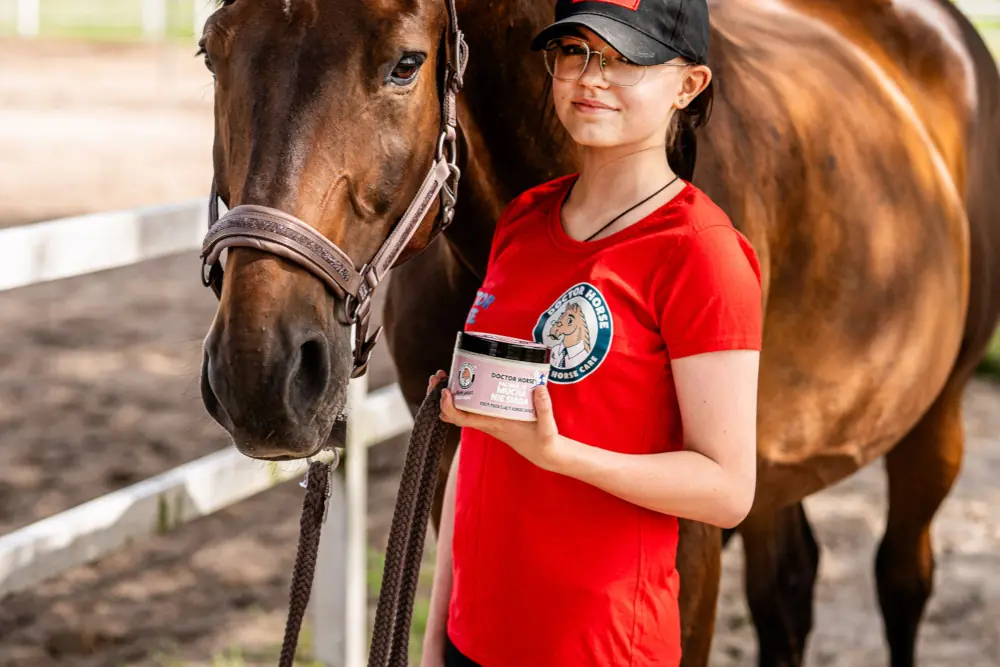
Anyone who spends the summer in a stable is familiar with this phenomenon: a horse grazes peacefully in the paddock, and a cloud of flies, gosses, midges begins to circle around it. Sometimes a horse becomes so nervous that it is unable to rest or focus on training. He starts to wag his tail, shake his head, dig into the ground or rub against the fence.
In this post, we'll dispel the most popular myths about horse odor, explain why some horses are more prone to insects than others, and show how natural odor masking works, which is becoming an alternative to aggressive chemicals.
Does a horse really "smell for flies"? Facts and Science
It's not a myth: horses actually emit odors that attract insects. There are compounds in horse sweat and skin sebum that are undetectable or barely perceptible to humans, but to flies, gosses or midges are like an open map leading straight to the host. It only takes a few minutes for a horse exposed to the heat to become covered in sweat and its natural odor barrier to start working... against it. This is why insects are so eager to choose horses as a target.
Interestingly, the differences between the horses are large. Some horses have more reactive skin, produce more sweat, and their smell is more "distinct" to insects. Light-skinned horses tend to be more delicate and are more easily irritated, making them quick victims of bites. This explains why, in the same stable, one horse hardly reacts to insects, while another scratches incessantly.
Can human perfume or deodorant be used to mask the smell of a horse?
Human deodorant, perfume or body mist are not intended for use on horse skin. They have a completely different pH, contain substances that can cause allergic reactions in the horse, and sometimes even irritation or sunburn.
What's more, intense artificial scents can... attract insects even more, rather than confuse them. That is why it is so important to reach for products created specifically for horses, which have mild, natural formulas and are safe even for daily use. This is where the solution comes in the form of odor masking, rather than eliminating it completely or aggressively "killing" it with chemical agents.
How odor masking works in Doctor Horse products?
Shampoo "It smells that a fly does not sit down" from Doctor Horse is an example of a thoughtful product that works in harmony with horse skin. Its formula is based on natural ingredients that not only wash, but, above all, create a delicate fragrant "coat" on the coat, reducing the intensity of the horse's natural odor. It is this camouflage effect that makes the horse less interesting to insects.
Odor-masking products restore the horse's skin's natural balance, allowing daily care without the risk of irritation. This method is especially appreciated by owners of horses with sensitive skin, mares in foal or foals.
Why some horses are more vulnerable to insects than others?
You can often hear in the stables: "on my horse do not sit flies, but on the one next to it - a whole swarm!". This is due to several factors:
- skin type (light, pink skin is softer),
- the amount of sweat secreted,
- diet (certain ingredients can affect skin odor),
- general health and skin condition.
An additional risk factor is the so-called lime, also known as summer eczema. It is a chronic, allergic reaction of the horse's skin to the bites of insects, mainly midges and flies. It manifests itself with intense itching, baldness, skin lesions in the tail, mane, groin area, and sometimes even serous leaks. Horses afflicted with lime disease suffer doubly - not only physically, but also mentally, becoming irritable, restless and sometimes aggressive. In such horses, grooming requires special attention: regular washing with mild shampoos, use of odor-masking preparations, mechanical protection (such as mesh derrieres), and in more serious cases also consultation with a veterinarian and implementation of treatment.
That's why it's not worth comparing your horse with others - it's better to observe its individual reactions and adjust care accordingly. For horses that are extremely susceptible to insects, a great solution is to regularly use not only a shampoo "It smells that a fly does not sit down" but also camouflage mist i spot cream, which increase protection in the most sensitive areas.
Masking odor is not a miraculous barrier, but part of conscious care
It is worth noting that odor-masking products are not "armor" that will make the horse completely invisible to insects. This is part of a holistic care that helps reduce insect interest, improves the horse's comfort and reduces its defensive reactions.
Therefore, summer care should also include:
- regular bathing,
- sun protection with the help of Parasun
- care of wounds and abrasions by means of Gel patch
- mitigation of bites with ointment On the Bubble
Bottom line: by dispelling myths, you build better care
A horse is a sensitive, sentient animal that does not overreact when reacting to insects. Myths about spraying it with human perfume or that "nothing works, so there's no point in trying" do more harm than good. The natural odor masking offered by Doctor Horse products is a solution based on respect for the horse's biology and its needs.
If you want to learn more about how to use the products properly, take a look at doctor Horse YouTube channel. There you will find instructional videos, expert advice and tips on how to build a summer skincare routine that really works.
Remember: conscious care is not magic, but daily care. And this one always brings the best results - for the horse and for you.