
How to take care of hooves in autumn, when it rains non-stop?
Rain, mud, moisture and increasingly shorter days - autumn is a real test for horses' hooves. Reduced exercise, sitting in stalls and the constant presence of moisture create ideal conditions for the growth of bacteria and hoof diseases. For horse owners, it's a time of increased vigilance and well-thought-out care.
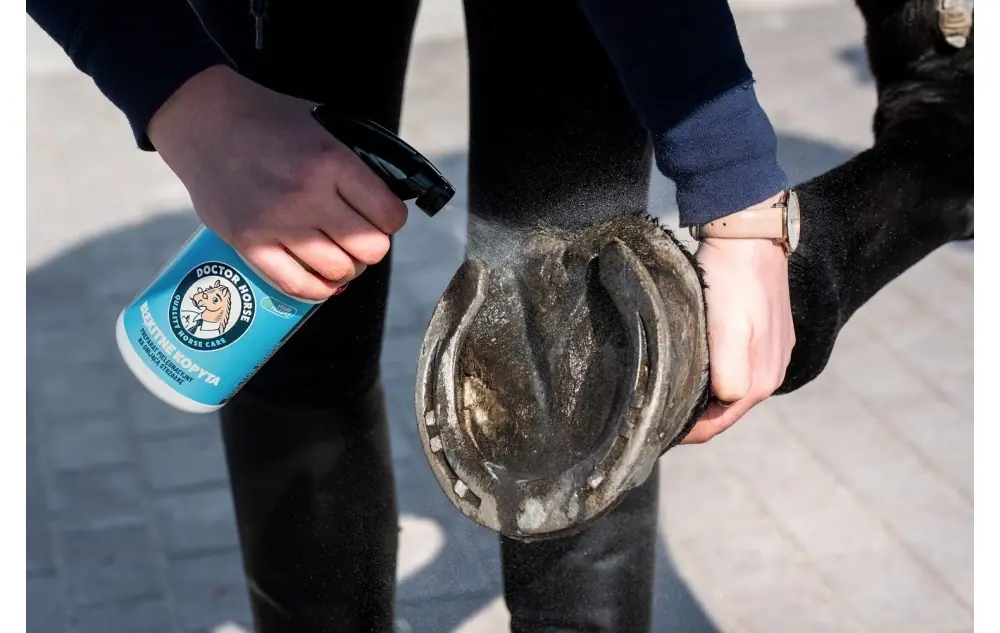
In this post we will explain how to take care of hooves in autumn, when it rains almost constantly, and why the series Doctor Horse Blue Hooves should be in every stable first aid kit.
Why autumn is hard on hooves?
From a hoof health perspective, autumn is one of the most difficult seasons of the year.
The reason is:
- excessive humidity, constant contact with mud, wet bedding and water in the paddock,
- limited movement - horses spend more time in stalls,
- weaker ventilation, especially tightly closed stables and lack of fresh air,
All of these factors intensify: fibula rot, fungal development and lump, which can develop very quickly, often without obvious symptoms at first.
Daily routine - cleaning is key
Even on the rainiest of rainy days, it's a good idea to keep up the ritual of daily hoof cleaning. Even if the horse stood in a stall all day, contact with damp bedding is enough to aggravate the hoof condition.
What to look for when cleaning?
- the presence of a black, smeary smear in the sagittal grooves,
- unpleasant odor,
- soft, easily collapsible arrow structure,
- cracks, unevenness within the white line.
All these signals may indicate the beginnings of fibula decay.
Litter: dry doesn't mean sterile
Many horse owners think that if the bedding looks dry it is safe. Meanwhile, even the slight dampness, the horse's body heat and the lack of ventilation in the stall are ideal conditions for the growth of anaerobic bacteria.
How to take care of the quality of the bedding?
- regular replacement of the top layer of straw, sawdust or pellets
- daily box airing,
- limit the use of rubber mats if they retain moisture,
- prophylactic use of preparations that promote hoof hygiene.
Natural disinfection - safe everyday life
Daily use of strong antibacterial preparations can lead to dryness and even damage to the hoof horn structure. That's why it's so important to use gentle but effective remedies based on natural ingredients.
Blue Hooves from Doctor Horse are products designed for daily prevention:
- act antibacterial, but does not dry out the horn,
- they form a light protective film,
- can be used prophylactically and interventively.
Movement and ventilation - two underestimated pillars of healthy hooves
Although autumn often does not encourage activity, it is worth taking care of your horse's daily walk, even a short one. Even 20 minutes of walking on varied ground allows the hoof to naturally "massage" and improve circulation in the hoof box.
Ventilation in the stable also plays a big role - closed, stuffy stalls promote the proliferation of microorganisms.
When cleaning is not enough reach for support
If symptoms of decay appear despite daily care, it is not worth waiting. Formulations from the Blue Hoof line should be used 1-2 times a day in sensitive areas - sagittal grooves, white line, cracks. You should also consider consulting a specialist; a farrier or vet.
Summary
Autumn is a time of exceptional challenge for horses' hooves. Ensure regular cleaning, good stall conditions and natural protection. With the Blue Hoof line, you can act quickly, effectively and safely - before the problem develops.