
Mud fever
( number of products: 6 )
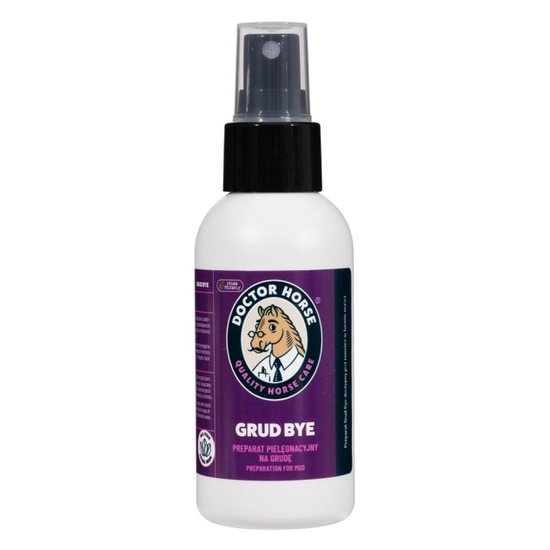



Mud fever in horses is a bacterial skin condition around the pasterns: the skin turns red, flakes and develops scabs. The pasterns of horses that are in contact with wet ground need particular attention, especially in autumn and winter. The Doctor Horse care products for mud fever are the vegan GrudBye line, available as an ointment and a spray.
Mud fever ointment or spray
GrudBye mud fever ointment has a thick formula with zinc oxide and pharmaceutical silicone. It does not run off where it is applied but forms a protective layer on the skin against moisture. It also contains urea, which moisturises and softens the skin and makes it easier to remove dead skin cells, as well as D-panthenol, which soothes irritation. It contains no doping substances.
GrudBye spray is lighter and easier to apply, and with it there is no need to touch the affected areas. It has urea and D-panthenol in its formula, just like the ointment.
Both forms share a blend of four essential oils: oregano, basil, sage and tea tree. The ointment comes in 450 g and 100 g sizes and the spray in 500 ml and 100 ml, and the small spray is easy to take along on a trip or to a competition.
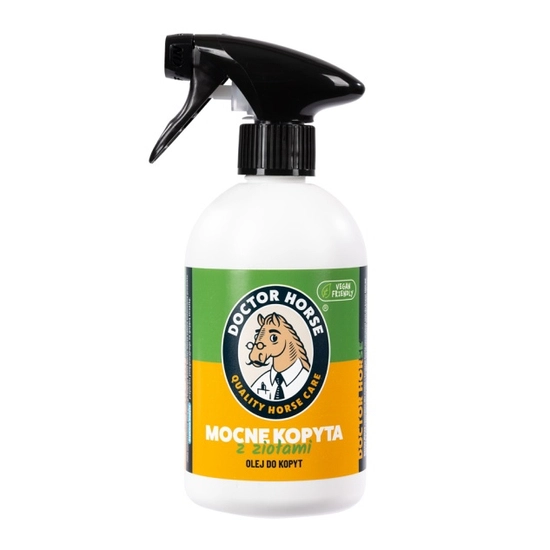
Strong Hooves with Herbs spray is an oil for hoof care, not for the skin of the pasterns, so it will not replace a mud fever product. The mud fever kit combines GrudBye with the same oil, only in a tin with a brush. Used regularly, the oil helps protect the hooves against excessive drying out and against the negative effects of moisture, which often goes hand in hand with mud fever.
How to use mud fever products
First, wet mud is washed off the pasterns and dried mud is brushed out until the skin is clean. Shampoo is not used every day, as it can wash away the skin's natural protective layer. The skin is dried thoroughly, preferably with a disposable paper towel. The ointment is applied in a generous layer without rubbing it in and left to dry. The spray is applied from a few centimetres away, avoiding the eyes and mucous membranes. The affected skin should not be scraped.
At first the product is used daily for 7 to 10 days. After that, once or twice a week is enough, especially after the horse has been in contact with wet ground.
Protective gloves are recommended with both forms, as is a patch test before first use. If there are a lot of scabs, the vet needs to be called.